Some of the info I have copied from a hand-out we received on the day...
Edible Flowers - Nasturtium, Pineapple Sage flowers and leaves, Society Garlic flower, Garlic Chives flower...
Brazillian Spinach - (Sissoo Spinach, Sambu Lettuce) Alternanthera Triandra sp.
Origin: Highlands, wet, cool South America
Plant: Sept - March
Harvest: Sept - June
Related to Hibiscus. Mucilaginous.
Kan Kong - eat end bits - hollow stems. Good greens for summer. Likes damp spots. Can be eaten raw. Grown from chopped up sections.
Ceylon Spinach - lovely raw. Mucilaginous. Trailer or loose limber. Red stem or green stem varieties. Seed of red stem can be used as food colouring.
Tahitian Spinach (Taro family) Xanthosoma Brasillience - grown as a green.
Origin: hot, humid tropics
Plant: Sept-Feb
Harvest: Nov-May
The tahitian spinach leaf is better than taro and cocoyam as a 'tropical green' as it has the least amount of irritating crystals and does not need a long cooking time - ten minutes is adequate. Serving the leaves with coconut milk or cream will help the body to use the Vitamin A, which is a fat-soluble vitamin. Harvest the young leaves and cook in stews, casseroles and leaf wraps. This plant does not have an edible corm.
Lebanese Cress - likes damp and shade. Ground cover, slightly peppery.
Salad Mallow (Corchorus olitorius) (Mulaheyah, Egyptian Spinach, Jews Mallow)
Put the little seed pods in salads.
Thursday, 23 February 2012


Tuesday, 21 February 2012
Workshops at Yandina Community Gardens - No.1
Our first workshop was on the 21st of January - 'Identifying and Using Tropical Vegetables' with Robyn Ford and Linda Mahony.
This is what the flyer read:
If you have ever wondered just what to do with all the unusual 'permie' plants that you now seem be growing in your vegie gardens - apart from using them as mulch that is - then come along to this workshop where Robyn will take you through a variety of these plants from identification to growing requirements. There will be samples of some yummy food made with these plants available for you to taste.
We left home around 7:15am, stopped for a wee break at the big servo on the way, then arrived just as it began at 9:30am. The room in the community centre, which was once a small suburban house, had been opened up from two smaller rooms, but it was standing room only by the time we got there! The organisers were amazed - last year they had averaged 30 people at their workshops - we signed in as numbers 72 and 73!
I'll now relay what I wrote as we stood there and listened...
(http://en.wikipedia.org/wiki/Turmeric for pics and more info...)
Tumeric - dies down in winter - best time to harvest. Easy to make into powder - chop in processor, dry it in dehydrator, then grind up with mortar and pestle.
(http://en.wikipedia.org/wiki/Ginger for pics and more info)
Ginger - same as Tumeric.

 (Taken at Crystal Waters, Maleny, Qld)
(http://en.wikipedia.org/wiki/Lemon_Myrtle for more info)
Lemon Myrtle (Backhousia citriodora, a native tree) aka lemon myrtle, lemon scented myrtle, lemon scented ironwood great leaves, has medicinal uses, and is fabulous in tea.
(http://en.wikipedia.org/wiki/Coriander for pics and more info)
Coriander - the Mexican and Sawtooth varieties are perennial; not as tender or pretty as the best known sort, but have the same flavour. (I bought a small pot plant of the Sawtooth back and planted it at the Kitchen garden.)
This is what the flyer read:
If you have ever wondered just what to do with all the unusual 'permie' plants that you now seem be growing in your vegie gardens - apart from using them as mulch that is - then come along to this workshop where Robyn will take you through a variety of these plants from identification to growing requirements. There will be samples of some yummy food made with these plants available for you to taste.
We left home around 7:15am, stopped for a wee break at the big servo on the way, then arrived just as it began at 9:30am. The room in the community centre, which was once a small suburban house, had been opened up from two smaller rooms, but it was standing room only by the time we got there! The organisers were amazed - last year they had averaged 30 people at their workshops - we signed in as numbers 72 and 73!
I'll now relay what I wrote as we stood there and listened...
(http://en.wikipedia.org/wiki/Turmeric for pics and more info...)
Tumeric - dies down in winter - best time to harvest. Easy to make into powder - chop in processor, dry it in dehydrator, then grind up with mortar and pestle.
(http://en.wikipedia.org/wiki/Ginger for pics and more info)
Ginger - same as Tumeric.


(http://en.wikipedia.org/wiki/Lemon_Myrtle for more info)
Lemon Myrtle (Backhousia citriodora, a native tree) aka lemon myrtle, lemon scented myrtle, lemon scented ironwood great leaves, has medicinal uses, and is fabulous in tea.
(http://en.wikipedia.org/wiki/Coriander for pics and more info)
Coriander - the Mexican and Sawtooth varieties are perennial; not as tender or pretty as the best known sort, but have the same flavour. (I bought a small pot plant of the Sawtooth back and planted it at the Kitchen garden.)
Saturday, 24 December 2011
Introduction to Permaculture Part 12
After another glorious morning tea, we headed up to the food forest again, with Evan. There we planted Garlic and Tumeric, as well as Pineapple Sage and Comfrey around the bottom edge of the trees we had planted yesterday.
 Evan showing us Garlic and Tumeric.

 Planting Pineapple Sage. (It has the most beautiful scent!)
By this stage the heat was starting to get to me and a couple of the others, so we headed down into the shade of the porch and helped Morag with setting out lunch. The rest came down 15 minutes later and we all had lunch. This time we had some visiting wildlife!

Morag and Evan took pity on us and after lunch we did some propagation and potting on the table under the porch. It was much cooler there, especially with the breeze coming up from the dam.
Morag showed us how to propagate a few plants, from hard and soft stem cuttings, and by planting. A number of plants were potted up for us to take home, and Morag took those interested, out for a ramble around the garden to get getting of much admired plants! We were also given a selection of seeds to take home if we wished. I took some for the community garden.
I took home a potted Arrowroot plant and some Lemongrass, as well as a potted cutting of Lavender and a cutting of Pineapple Sage. So far (3 weeks later) everything is growing, although I haven't yet planted out the lavender, and the sage is in a glass of water, and still growing! I'm waiting for roots...
 Plant propagation through hard and soft cuttings, and planting. Also seed dissemination!
 Our weekend course was over soon after that. We walked back to the bunkhouse, packed up, and on the way out stopped to see the bamboo grove (pictured earlier). Then we took the long trek home, although we were running a few hours early due to the early start that morning.
I found it a great weekend - I picked up a few things I didn't know, and had many more things confirmed. I also got to meet a great bunch of people, and loved having Steve there to share it with me. I hope we can both get back up there to do our Permaculture Design Certificates in 2012.
Adie,
Dec 2011.


Ginger growing in the food forest.

By this stage the heat was starting to get to me and a couple of the others, so we headed down into the shade of the porch and helped Morag with setting out lunch. The rest came down 15 minutes later and we all had lunch. This time we had some visiting wildlife!
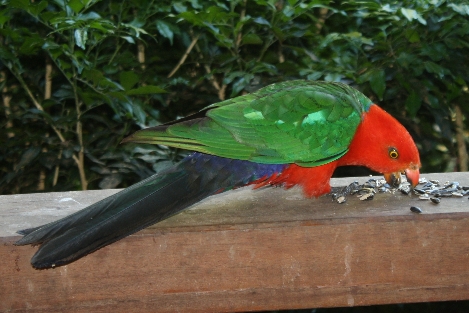
Morag and Evan took pity on us and after lunch we did some propagation and potting on the table under the porch. It was much cooler there, especially with the breeze coming up from the dam.
Morag showed us how to propagate a few plants, from hard and soft stem cuttings, and by planting. A number of plants were potted up for us to take home, and Morag took those interested, out for a ramble around the garden to get getting of much admired plants! We were also given a selection of seeds to take home if we wished. I took some for the community garden.
I took home a potted Arrowroot plant and some Lemongrass, as well as a potted cutting of Lavender and a cutting of Pineapple Sage. So far (3 weeks later) everything is growing, although I haven't yet planted out the lavender, and the sage is in a glass of water, and still growing! I'm waiting for roots...


I found it a great weekend - I picked up a few things I didn't know, and had many more things confirmed. I also got to meet a great bunch of people, and loved having Steve there to share it with me. I hope we can both get back up there to do our Permaculture Design Certificates in 2012.
Adie,
Dec 2011.
Introduction to Permaculture Part 11
ItP Garden in Stages...
1.How it looked before we began.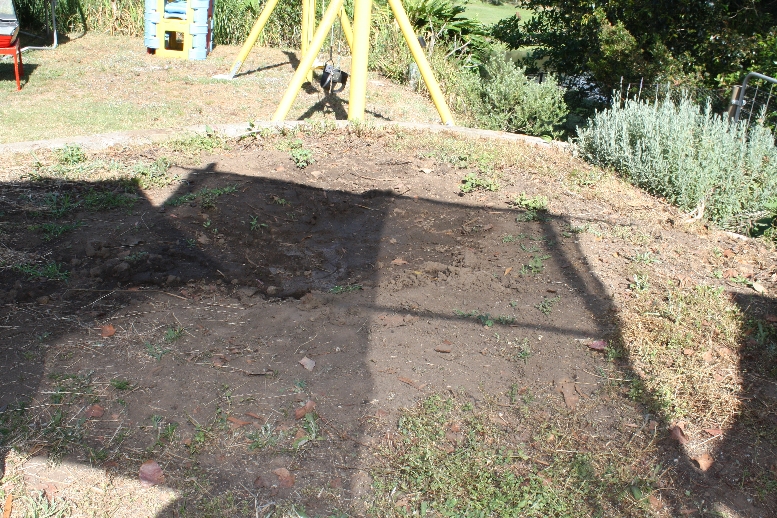


7. The kids helping Morag plant out. They were our 'newspaper soakers' also!

Thursday, 22 December 2011
Introduction to Permaculture Part 10


Morag told us that beneficial insects prefer the yellow and red flowers.

Morag with the worm tower. It's about 3 times as long as the ones we made for the Community and home gardens!
Monday, 19 December 2011
Introduction to Permaculture Part 9
Today it was Morag's turn to take us out. We went to the Zones 1 and 2 gardens and got to check out the weed tea, worm and normal composting.


 The reason why - the deep fat root that aerates and loosens the soil.
Morag then took us down to the Zone 1 veggie garden where there was a large patch of insect attracting (and just plain pretty!) flowers.


Morag showing us the Zone 2 garden.

Cassava.

Daikon Radish - used by Masanobu Fukuoka (Japanese visionary and author of 'One Straw Revolution') as a soil conditioner.

Morag then took us down to the Zone 1 veggie garden where there was a large patch of insect attracting (and just plain pretty!) flowers.

Introduction to Permaculture Part 8

We then planted a couple of Mandarins.


After we finished planting, watering, sheet mulching and then hay mulching, we were done for the first day!
Steve and I headed for camp, where we changed into swimmers and headed for the bridge over the Mary River, reputed to be the best swimming spot nearby. The water was ICY! After such a hot day, it was quite a shock to find that I couldn't just dive right in. It took me 15 minutes to work my way from my ankles to my waist (as deep as it got), and NONE of the other adults went past their shins! It was divine – so cool and clear and refreshing. It's been too long since I've swum in a clean river. It'd kill you to swim in our nearest, the Bremer.
After our (!) swim we headed back to the bunkhouse, where we were sharing a room with 2 of the male course participants. I had sore eyes from a day in the bright sun, so had a short kip whilst Steve chatted to some other campers at the open air kitchen. Soon after we headed to the Village Green where dinner was served by Morag and Evan - I brought my newly-discovered recipe of coconut yoghurt, and some rhubarb stewed with coconut sugar. A great hit, I was lucky to get any!
We had an early night, worn out by a long day in the sun, despite being entertained by the 'open mike' music at the Village Green. The mattresses on the bunks were a tad hard, but although at one stage I listened to a chorus of snores from my 3 male bunkroom mates, I had a reasonable night's sleep.
Bright and early the next morning we congregated at Evan and Morag's for breakfast. By consensus we decided to meet for breakfast by 7:30am to get out in the garden before the sun really got hot. Another high 30's day.
Breakfast was cereal and milk, sourdough bread and spreads, and fruit, with coffee and numerous types of teas. Yummy!
Steve and I headed for camp, where we changed into swimmers and headed for the bridge over the Mary River, reputed to be the best swimming spot nearby. The water was ICY! After such a hot day, it was quite a shock to find that I couldn't just dive right in. It took me 15 minutes to work my way from my ankles to my waist (as deep as it got), and NONE of the other adults went past their shins! It was divine – so cool and clear and refreshing. It's been too long since I've swum in a clean river. It'd kill you to swim in our nearest, the Bremer.
After our (!) swim we headed back to the bunkhouse, where we were sharing a room with 2 of the male course participants. I had sore eyes from a day in the bright sun, so had a short kip whilst Steve chatted to some other campers at the open air kitchen. Soon after we headed to the Village Green where dinner was served by Morag and Evan - I brought my newly-discovered recipe of coconut yoghurt, and some rhubarb stewed with coconut sugar. A great hit, I was lucky to get any!
We had an early night, worn out by a long day in the sun, despite being entertained by the 'open mike' music at the Village Green. The mattresses on the bunks were a tad hard, but although at one stage I listened to a chorus of snores from my 3 male bunkroom mates, I had a reasonable night's sleep.
Bright and early the next morning we congregated at Evan and Morag's for breakfast. By consensus we decided to meet for breakfast by 7:30am to get out in the garden before the sun really got hot. Another high 30's day.
Breakfast was cereal and milk, sourdough bread and spreads, and fruit, with coffee and numerous types of teas. Yummy!
Subscribe to:
Posts (Atom)